With the expansion of global trade and the ongoing development of marine resources, there is increasing focus on enhancing the technical capabilities and operational efficiency of vessels—the primary means of transport across oceans and inland waterways. Within the complex systems of a ship, connectors serve as critical components responsible for the transmission of power, signals, and data; their performance and reliability are directly linked to the safe operation and overall performance of the vessel.
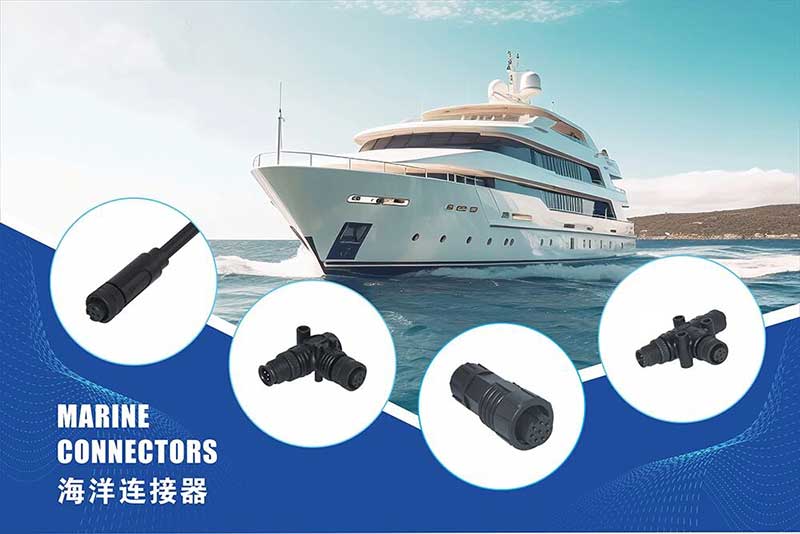
I. Examples of Connector Applications in the Marine Sector
Marine Motor Connections: Connectors are used to link marine motors, ensuring a stable power supply and proper motor operation.
Marine Instrument Connections: Within a vessel’s instrumentation system, connectors link various sensors and displays, ensuring that instruments accurately show the ship’s navigational status.
Navigation System Connections: Connectors play a critical role in marine navigation systems by linking equipment such as GPS receivers and radar, ensuring accurate navigation and positioning.
Communication System Connections: In a vessel’s communication system, connectors link components such as antennas and radio equipment, ensuring the ship maintains stable communication with the outside world.
II. Advantages of waterproof connectors on ships
NMEA2000 (recommended reading:SIGNAL NMEA 2000 Connectors: The Premier Choice for Marine Waterproof Connectors) During the voyage of the ship, it will always face the challenges of various severe weather and uncertain factors. As a key factor in connecting electrical energy transmission on ships, connectors are particularly important in terms of corrosion resistance and stability.
High waterproof level: The connectors all have IP67/IP68/IP69K waterproof level, which can effectively prevent water and moisture from intruding, ensuring stable working conditions in harsh marine environments. Anti-corrosion performance: Shenggena's all-plastic connectors are not afraid of corrosion from the ocean's high salt and humid gases, ensuring the connector's tolerance and the safety of internal components.
Convenient installation and disassembly: The connector adopts a plug-in design, making installation and disassembly quick and easy. Equipped with a reliable locking device to ensure that the connector will not accidentally loosen or fall off during use.
III. Marine application products
The ship automation system includes various electronic equipment, such as: engine instruments, navigation instruments, fish detectors, GPS receivers, autopilots, wind measuring instruments, multimedia displays, safety systems, sensors and navigation chart plotters, etc. The DeviceNet/NMEA 2000 standard defines two sizes of cables for connecting marine equipment, namely Min (7/8”) and Micro (M12) series. You can find connectors and cables of these two series at Sengen.