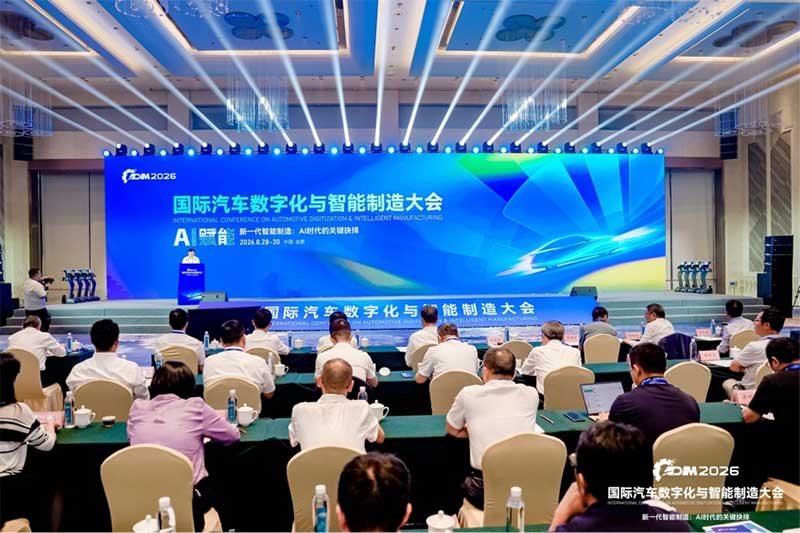
On August 29–30, 2026, the 2026 (6th) International Conference on Automotive Digitalization and Intelligent Manufacturing was held at the Cuihu Hotel in Hefei. Centered on the theme "Next-Generation Intelligent Manufacturing: Critical Choices in the AI Era," the conference brought together vehicle manufacturers, equipment makers, research institutions, and supply chain enterprises. Participants focused on industrial intelligent agents and the construction of digital-intelligent factories, jointly exploring pathways for the intelligent transformation of the automotive industry.
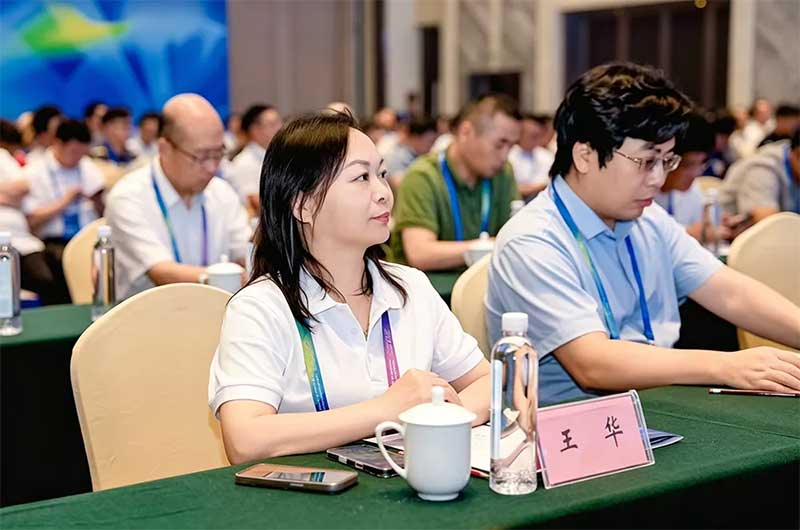
Wang Hua, Deputy General Manager of Shenzhen Signal Electronics Co., Ltd., was invited to attend the event. At the breakout session titled "R&D and Application of Industrial Intelligent Agents for Digital-Intelligent Production," she delivered a keynote speech: "Fortifying the Neural Pathways of Industrial Intelligent Agents—High-Speed, Reliable Connectivity Systems Empowering Intelligent Manufacturing for Automobiles and Robots." This session was moderated by Li Yunsheng, former Deputy General Manager of the Ninth Design & Research Institute of the Machinery Industry. Experts from organizations such as the China Academy of Information and Communications Technology (CAICT), NIO, Xiaomi Auto, Dongfeng Equipment, Changan Auto, Shanghai Gelinbei, and Unicom Data Intelligence joined the discussion on the practical implementation of industrial intelligent agents in automotive production lines.
The automotive industry is currently undergoing a dual transformation driven by the shift to new energy and the practical application of AI. With humanoid robots and AI-powered sensing equipment being deployed on a large scale in welding, painting, and final assembly workshops, the industry is evolving from single-process automation to full-process intelligence. In her speech, Wang Hua emphasized that industrial intelligent agents are not merely a collection of algorithms; a robust hardware foundation is a prerequisite for stable operation. While many projects demonstrate excellent results in simulations, actual factory deployments frequently encounter issues such as signal interruptions, transmission latency, and cable damage. Consequently, shortcomings in connectivity hardware have become a critical bottleneck hindering the large-scale commercialization of industrial intelligent agents.
She likened connectors and high-speed cable assemblies to the "neural network" of industrial intelligent agents. These components perform three vital functions—power supply, high-speed signal transmission (at the millisecond level), and strong electromagnetic interference (EMI) resistance—thereby ensuring zero packet loss for commands and uninterrupted link connectivity. The harsh operating conditions of automotive production lines—characterized by repeated cable bending and twisting, electromagnetic interference, exposure to dust and oil, and the need for high-bandwidth data transmission—pose rigorous challenges for connectivity systems. At the forum, Xiaomi Auto highlighted three major industry pain points: an imbalance between strong perception and weak decision-making capabilities; closed systems that prevent evolution; and a disconnect between software and hardware that disrupts execution—where AI analysis merely generates reports without effectively linking to on-site hardware for closed-loop execution. This perspective echoed Wang Hua’s presentation, leading to an industry consensus: software defines intelligence, while hardware determines the boundaries. Only by integrating power and data transmission links, bridging the software-hardware execution gap, and establishing a complete chain of "data governance, rule evolution, and closed-loop execution" can industrial intelligent agents transition from merely "appearing intelligent" to being "truly practical for on-site operations."
To foster large-scale industrial development, Wang Hua proposed four recommendations: prioritize software-hardware synergy to solidify the underlying hardware foundation; emphasize validation under real-world operating conditions rather than relying solely on laboratory testing standards; accelerate the domestic substitution of core hardware to ensure supply chain security; and promote collaboration among industry, academia, and research sectors by incorporating connectors and wiring harnesses into the industrial intelligent agent "open-competition" validation system, thereby ensuring implementation quality from the source.
Signal Electronics is a national-level "Little Giant" enterprise (recognized for specialization, refinement, uniqueness, and innovation) and a national high-tech enterprise. Since 2009, it has focused on the industrial connectivity sector, establishing operations across four major bases—Shenzhen, Hunan, Nanjing, and Singapore. The company boasts a 40,000-square-meter modern manufacturing facility and a professional team of over 800 employees, with products exported to more than 60 countries. It has achieved full-process vertical integration and holds multiple authoritative certifications, including IATF16949 (automotive quality management) and SPE (Single Pair Ethernet) standards, with products achieving protection ratings up to IP69K.
Leveraging its M5–M40 series of industrial circular connectors and custom wiring harness capabilities, the company’s solutions are widely applied in automotive automated production lines, machine vision, LiDAR, humanoid robots, and AI-driven dexterous hands. Its highly flexible wiring harnesses—capable of withstanding tens of millions of dynamic bending cycles—effectively solve connectivity challenges in confined spaces involving motion. In April 2026, the industry's first group standard—*Technical Requirements for Wiring Harness Assemblies for Embodied AI Robots*—was officially released. Spearheaded by Signal, the standard was jointly drafted by over twenty leading enterprises, including Agibot, Pudu Robotics, LimX Dynamics, Huayan Robotics, Googol Technology, and Huacheng Industrial Control, thereby filling a gap in standards for this specific sector.
During the forum, Wang Hua engaged in discussions with industry chain partners—such as NIO, Xiaomi Auto, and Dongfeng Equipment—regarding hardware support, joint technological development, and pilot projects, aiming to identify opportunities for collaborative synergy.
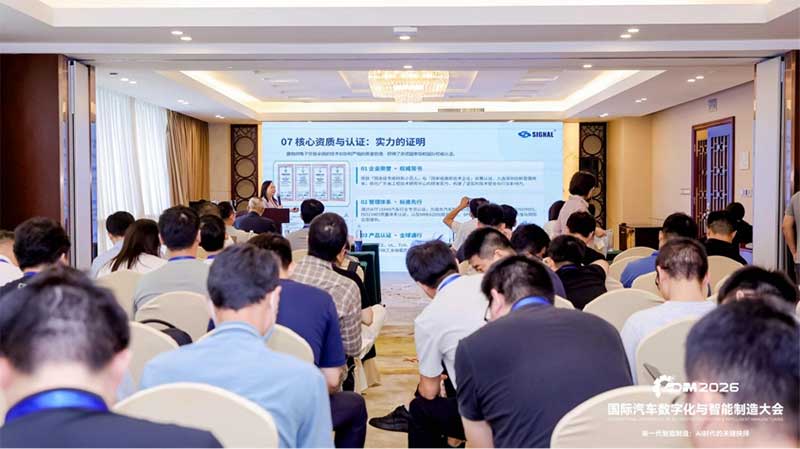
"AI algorithms serve as the brain of industrial intelligent agents, while high-reliability interconnect systems act as the neural network; both are indispensable. Only through the synergy of hardware and software can the full potential of industrial intelligent agents be unleashed," stated Wang Hua. Looking ahead, Signal plans to deepen its focus on the high-speed transmission sector for embodied AI, refine its high-reliability interconnect infrastructure, and collaborate with upstream and downstream partners to facilitate the commercial deployment of industrial intelligent agents and drive the high-quality, digital, and intelligent transformation of the automotive industry.