SSF connectors are common industrial connectors; while designs and applications may vary slightly among manufacturers, they generally share the following characteristics:
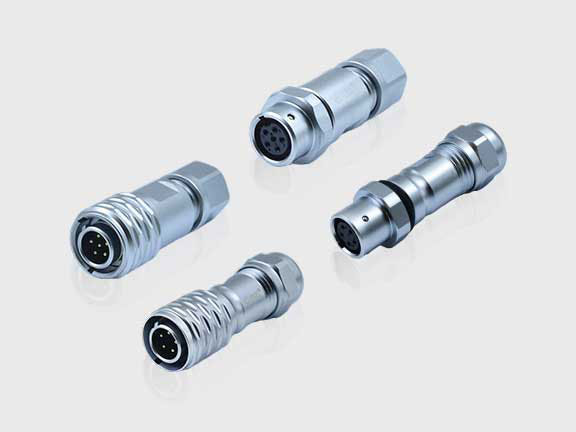
Vibration and Shock Resistance: Their structural design prioritizes mechanical stability, enabling them to withstand the vibrations and shocks encountered during equipment operation while ensuring reliable connections—making them suitable for mobile equipment, industrial machinery, and similar applications.
Multi-pin Configuration and High Current Capacity: They offer various pin configurations (e.g., 2 to 26 pins), with some models supporting high-current transmission (e.g., 18A and above) to meet power and signal transmission requirements.
High Ingress Protection Rating: Most SSF connectors feature an IP67 or higher rating, providing effective protection against water and dust; this makes them suitable for outdoor use or harsh industrial environments, such as mines, marine exploration sites, and factory floors.
Quick Connection and Locking: They utilize push-pull self-locking, threaded locking, or bayonet-style designs that support one-handed operation, enabling rapid mating/unmating and reliable connections, thereby enhancing installation and maintenance efficiency.
All-Metal Shielding: Some SSF connectors feature all-metal housings that provide electromagnetic shielding to reduce signal interference, making them ideal for applications requiring high signal integrity, such as communication equipment and detection instruments.
Materials and Manufacturing: Housings are typically made of metals such as brass, zinc alloy, or stainless steel, while contacts utilize conductive materials like beryllium copper to ensure excellent electrical conductivity and corrosion resistance.
Versatile Mounting Options: They support various mounting methods—such as front-panel mounting, panel mounting, and straight in-line mating—to accommodate different equipment structures and spatial layout requirements.
SIGNAL SSF connectors are widely used in sectors such as energy, telecommunications, industrial automation, medical equipment, and outdoor monitoring, serving as vital components for ensuring stable equipment operation.