Heavy-duty connectors consist of an insert and contacts forming an electrical module that provides electrical connectivity for equipment. They are primarily composed of three key parts: the insert, the contacts, and the housing. When transmitting power, signals, or data in practical applications, there are generally two wiring methods: permanent hard-wiring and connector-based connection. Hard-wiring requires disconnecting and reconnecting every individual wire whenever a disconnection or reconnection is needed, incurring significant labor costs. Troubleshooting any wiring errors can take hours. In contrast, connectors simply require plugging and unplugging (though the initial cost is higher) and do not require specialized technical personnel. For many, the long-term advantages of using connectors far outweigh those of hard-wiring.
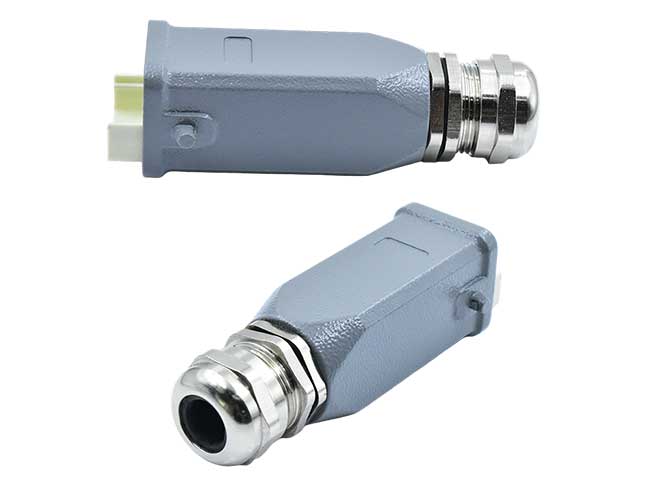
There are four main connection methods for heavy-duty connectors:
1. Bayonet connection:
A reliable and rapid method for connecting and disconnecting. Most bayonet-style electrical connectors feature a visual indicator—visible through a small hole on the side of the coupling nut—to confirm correct connection and locking.
2. Threaded connection:
A connection method frequently used for electrical connectors with large contacts or those operating in environments with intense vibration. Once connected, a safety wire can be installed to prevent loosening. While this method is highly reliable, the connection and disconnection speeds are relatively slow.
3. Push-pull (plug-in) connection:
A versatile connection method. Connecting and disconnecting involves a simple reciprocating linear motion—without the need for twisting or rotation—requiring minimal working space. Common designs include ball-lock or pin-lock mechanisms. Since this method lacks mechanical leverage, any incorrect insertion results in noticeably increased mechanical resistance, allowing the error to be detected immediately. 4. Cabinet Connection Method:
This refers to a type of heavy-duty connector used for equipment mounted close to a frame that requires "blind mating." Such connectors enable electrical equipment to be made lighter and more compact, while also enhancing ease of maintenance and reliability. Since the operator cannot visually verify the connection status, a precise alignment mechanism is essential to prevent forced mating of misaligned connectors and to make incorrect insertion impossible. Cabinet-style electrical connectors typically employ a floating or resilient contact design to ensure proper mating.